
A systematic process for innovation
TRIZ is a systematic process that develops critical thinking skills and promotes creativity and innovation. Elements of TRIZ can be effectively used by a wide range of people — from children to adults — and throughout many industries and sciences.
TRIZ (pronounced TREEZ) is the Russian acronym for the Theory of Inventive Problem Solving. This proven algorithmic approach to solving technical problems began in 1946 when the Russian engineer and scientist Genrikh Altshuller studied thousands of patents and noticed certain patterns. From these patterns he discovered that the evolution of a technical system is not a random process, but is governed by certain objective laws. These laws can be used to consciously develop a system along its path of technical evolution — by determining and implementing innovations.
One result of Altshuller's theory — that inventiveness and creativity can be learned — has fundamentally altered the psychological model of creativity.
TRIZ developed in the Soviet Union, moving underground after Altshuller was imprisoned for his "heretical" work, until the fall of the USSR when TRIZ re-emerged and migrated to the West. Today many Fortune 500 companies successfully use TRIZ methodology, and its use has expanded into bio-medical research, medicine, computer programming and business management.
TRIZ does not compete with or replace other quality methods. It synergistically complements methodologies like QFD, Six Sigma, Kaizen and Lean, and can be used to address their weaknesses.
Premise of TRIZ
"The evolution of successful technological systems is not random, but is governed by certain laws or prevailing trends."
— TRIZ Body of Knowledge, jointly developed by MATRIZ and the Altshuller Institute
Core concepts
- Ideal Final Result (IFR) and ideality
- Contradictions: administrative, engineering, physical
- Levels of inventions
- Trends (laws) of technological system evolution
- 40 inventive principles and the Contradiction Matrix
- Substance-Field analysis and the 76 standard solutions
- ARIZ — the algorithm for inventive problem solving
- Scientific effects: physical, chemical, geometrical
Read more
Lev Shulyak's "Introduction to TRIZ", excerpted from 40 Principles: PDF on aitriz.org
The founder
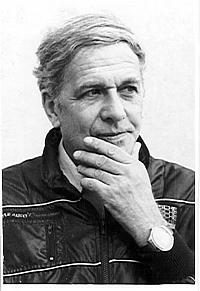
Genrikh Altshuller, 1926–1998
Genrikh Altshuller grew up in the remarkable city of Baku, Azerbaijan, in the former USSR. Baku was a cultural ecotone where European, Islamic and Asian cultures met. It is probably significant that TRIZ, which encompasses both Eastern and Western thought modalities, originated within such a diverse east-west climate. At age fourteen, Altshuller was awarded his first Soviet patent for an underwater breathing device.
Over one dozen patented inventions — and one engineering degree — later, Altshuller found himself working as a consultant in the Caspian Sea Naval Patent Office. He searched for a simple, scientific way of classifying inventions by their degree of inventiveness. After correlating thousands of patents he discovered that there were only five distinct levels of inventiveness, and several of these did not represent actual "inventions" but merely alterations or extensions of existing ones.
His analysis revealed that all technical systems evolve along natural and predictable lines of evolution, and that all industries utilized the same underlying innovative principles. Therefore these principles could be generalized for universal application — and innovation could be learned. It could be taught.
Even when Stalin rewarded Altshuller with imprisonment in a Siberian labor camp, he continued his work. He formed a "University for One" where persecuted intellectuals, authors, and college professors taught him their subjects of expertise. After Stalin's death, Altshuller was released. Unable to openly teach TRIZ, he began writing science fiction under the pen name Altov. He continued developing and teaching TRIZ with dozens of co-investigators throughout his life, eventually applying it to non-technical fields.
The Altshuller Institute is the only organization officially authorized by Genrikh Altshuller to use his name. More on Altshuller — an interview, his last communiqué, notes on his teaching, and tributes — is collected in the Library.
Why TRIZ works
Fundamental factors that point to TRIZ as an effective and transformational methodology
- Broad use. The same method applies across products, processes, and services.
- Patent base. The method comes from how real inventions were patented, not from one person's hunch.
- New options. Teams get solution paths they would not reach by staying with the first idea.
- Fits alongside. It works with the quality processes a company already uses, and it clears stalls in decisions.
- Less waste. A team spends less effort to reach a set of solution concepts.
- Faster concepts. It produces usable solution concepts in less time than unstructured search.
- Taught widely. People from the shop floor to the research lab can learn it and use it on the job.
"I know of no other approach to inventing that offers such a rich arsenal of both practical and imaginative thinking tools."George Prince, Co-founder of Synectics, Inc.
"The ultimate worldwide impact of TRIZ methodology upon innovative technology-driven businesses could easily match the impact of CAD systems on new product design."James P. Dunn, Co-Executive Director, CTC, NASA Regional Technology Transfer Center
"This methodology, TRIZ, can help technical innovation in a systematic way and help corporations and individuals reach their peak potential."Daniel Burrus, Burrus Research Associates
Companies that have used TRIZ
- Ford
- General Motors
- Chrysler
- Eastman Kodak
- Exxon
- Rockwell International
- Procter & Gamble
- Xerox
- Hewlett Packard
- Motorola
- BAE Systems
- Brunswick-Life Fitness
- Boeing
- Philips Semiconductor
- LG Electronics
- Delphi
- Boston Scientific
- Intel
- S.C. Johnson
- Samsung
- Siemens
- Honeywell
- NASA
- Toyota
Reference
The 40 inventive principles
Altshuller's forty principles for resolving engineering contradictions are the best-known TRIZ tool. Paired with the Contradiction Matrix, they point an inventor toward the principles that have most often resolved a given conflict between two system parameters.
- Segmentation
- Taking out (extraction)
- Local quality
- Asymmetry
- Merging (consolidation)
- Universality
- Nested doll
- Anti-weight (counterweight)
- Preliminary anti-action
- Preliminary action
- Beforehand cushioning
- Equipotentiality
- The other way round
- Spheroidality (curvature)
- Dynamics
- Partial or excessive actions
- Another dimension
- Mechanical vibration
- Periodic action
- Continuity of useful action
- Skipping (rushing through)
- Blessing in disguise
- Feedback
- Intermediary
- Self-service
- Copying
- Cheap short-living objects
- Mechanics substitution
- Pneumatics and hydraulics
- Flexible shells and thin films
- Porous materials
- Color changes
- Homogeneity
- Discarding and recovering
- Parameter changes
- Phase transitions
- Thermal expansion
- Strong oxidants
- Inert atmosphere
- Composite materials
Standards
The TRIZ Body of Knowledge
In order to elevate TRIZ to a larger stage, the development of a viable certification program is required. The Altshuller Institute spearheaded an initiative to define a universal set of guidelines so that TRIZ terms have the same meaning regardless of where the TRIZ user was trained.
The International TRIZ Association (MATRIZ), the Altshuller Institute for TRIZ Studies and the European TRIZ Association (ETRIA) mutually agreed to define the TRIZ Body of Knowledge. It was developed jointly by Simon Litvin, Vladimir Petrov and Mikhail Rubin of MATRIZ and Victor Fey of the Altshuller Institute.
To be included, a TRIZ concept, component or tool must be used by the majority of TRIZ schools in the world, in the majority of non-commercial publications by TRIZ Masters, and in the majority of TRIZ courses presently offered.
Download the Body of Knowledge (PDF)Structure of the Body of Knowledge
- Foundational concepts — dialectics, technological system, functions, ideality, sufields, IFR, contradictions, system operator
- Trends (laws) and sub-trends of technological system evolution
- ARIZ — Algorithm for Inventive Problem Solving
- Substance-Field analysis and the system of 76 standards
- Techniques for resolving contradictions — 40 principles, Contradiction Matrix, separation principles
- Scientific effects — physical, chemical, geometrical
- System analysis methods — function analysis, trimming, cause-effect analysis, failure anticipation
Recognition
TRIZ Masters
Genrikh Altshuller personally appointed the first TRIZ Masters before his death on September 24, 1998 — more than sixty practitioners from Baku, Saint Petersburg, Moscow, Kishinev, Novosibirsk and beyond, many of whom later brought TRIZ to the United States, Israel and Europe. Since October 14, 2006, the MATRIZ Dissertation Board has appointed new TRIZ Masters.
Certification
Become a certified practitioner
The Institute's certification program verifies that individuals have attained a level of accomplishment and expertise in TRIZ. Three primary levels — Associate, Practitioner and Specialist — lead toward Master.
Certification levels